

Options trading involves several terms that traders need to understand before taking a position. Among the most commonly used are ITM, ATM and OTM. These terms describe the relationship between an option’s strike price and the current price of its underlying asset.
Understanding whether an option is in the money, at the money, or out of the money can help traders evaluate an option’s intrinsic value, premium, and potential profitability.
This article explains ITM, ATM and OTM, their meaning for call and put options, and how these terms are used in options trading.
What are Options?
Options are derivative contracts that give the buyer the right, but not the obligation, to buy or sell an underlying asset at a specified strike price according to the terms of the contract.
Unlike stocks, which represent ownership in a company, options derive their value from an underlying asset such as a stock or index.
There are two main types of options:
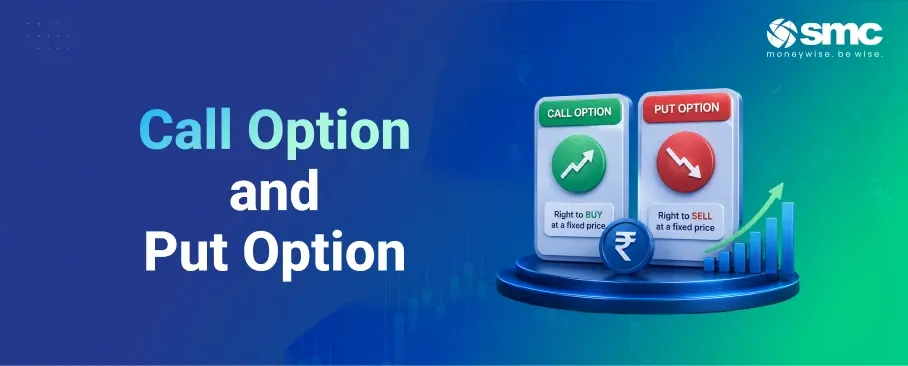
- Call Options: Give the buyer the right to buy the underlying asset at the specified strike price.
- Put Options: Give the buyer the right to sell the underlying asset at the specified strike price.
A call option generally gains value when the underlying asset's price rises, while a put option generally gains value when the underlying asset's price falls. However, the profitability of an option also depends on the premium paid, time to expiry and other factors.
ITM, ATM and OTM: Key Terms in Options
Three terms frequently used in options trading are ITM, ATM and OTM.
- ITM: In the Money
- ATM: At the Money
- OTM: Out of the Money
These terms describe the relationship between an option's strike price and the current market or spot price of the underlying asset.
1. ITM
The ITM full form in trading is In the Money.
An option is considered ITM when it has intrinsic value. The condition for being ITM differs for call and put options.
For Call Options: A call option is ITM when the strike price is below the current price of the underlying asset.
For example, if a stock is trading at ₹500 and a call option has a strike price of ₹480, the call is ITM because the holder has the right to buy the stock at ₹480 when its market price is ₹500. Its intrinsic value is ₹20 per share, calculated as the difference between the spot price and the strike price.
For Put Options: A put option is ITM when the strike price is above the current price of the underlying asset.
For example, if a stock is trading at ₹500 and a put option has a strike price of ₹520, the put is ITM because the holder has the right to sell the stock at ₹520 when its market price is ₹500. Its intrinsic value is ₹20 per share, calculated as the difference between the strike price and the spot price.
Being ITM does not automatically mean the trader has made a profit, as the premium paid for the option must also be considered.
2. ATM
ATM stands for At the Money.
An option is considered ATM when its strike price is equal to or very close to the current price of the underlying asset.
For example, if a stock is trading at ₹500, an option with a ₹500 strike price would generally be considered ATM.
Both call and put options can be ATM when their strike price is close to the underlying asset's current price.
An ATM option has little or no intrinsic value, so its premium largely consists of time value. Factors such as implied volatility and time remaining until expiry influence this time value.
3. OTM
The OTM full form is Out of the Money.
An OTM option has no intrinsic value because its strike price is unfavourable relative to the current price of the underlying asset.
For Call Options: A call option is OTM when the strike price is above the current price of the underlying asset.
For example, if a stock is trading at ₹500 and the call option has a strike price of ₹520, the call is OTM.
For Put Options: A put option is OTM when the strike price is below the current price of the underlying asset.
For example, if a stock is trading at ₹500 and the put option has a strike price of ₹480, the put is OTM.
OTM options have no intrinsic value, although they can still have a premium because the underlying asset may move favourably before expiry.
ITM vs ATM vs OTM at a Glance
Understanding the difference between ITM, ATM, and OTM options is important because an option's moneyness can affect its premium, risk, and potential payoff.
Key Concepts in Options Pricing: Strike Price vs Spot Price
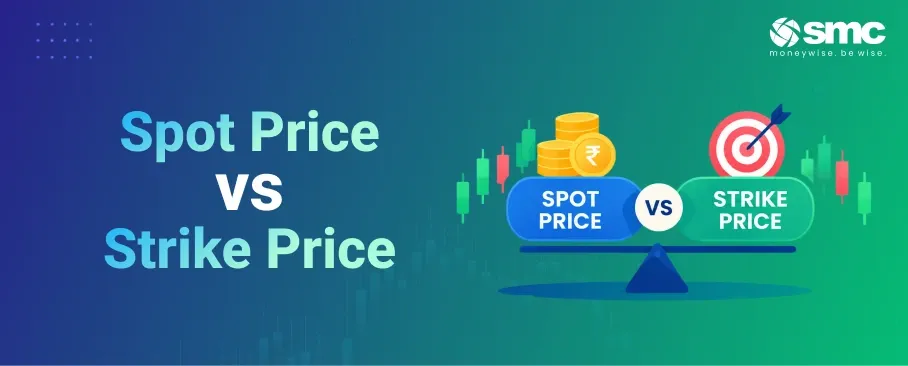
Knowing the difference between strike and spot prices is crucial to understanding ITM, ATM and OTM options.
- Strike Price: The predetermined price at which the option gives the buyer the right to buy or sell the underlying asset, according to the contract terms.
- Spot Price: The current market price of the underlying asset.
The relationship between these two prices determines whether an option is ITM, ATM or OTM.
For example, consider a stock trading at ₹1,000:
- ₹950 Call = ITM
- ₹1,000 Call = ATM
- ₹1,050 Call = OTM
For puts, the relationship is reversed:
- ₹1,050 Put = ITM
- ₹1,000 Put = ATM
- ₹950 Put = OTM
Factors Influencing Options Pricing
An option's premium is influenced by several factors, not just whether it is ITM, ATM or OTM.
- Time to Expiration: Options have a limited life. As expiry approaches, the time value of an option generally declines, with the rate of time decay becoming particularly important as expiration gets closer.
- Volatility: Higher expected volatility generally increases option premiums because there is a greater possibility of a significant price movement before expiry.
- Underlying Price: Changes in the underlying asset's price can change an option's moneyness and premium.
- Strike Price: The relationship between the strike price and underlying price determines whether the option is ITM, ATM or OTM.
- Interest Rates: Interest rates can also affect option pricing. However, their impact may be smaller than factors such as the underlying price, volatility and time to expiry for many short-term trades.
How Traders Use ITM, ATM and OTM Options
Each type of option can serve a different purpose depending on the trader's strategy and market outlook.
- ITM Options: ITM options have intrinsic value and generally have a higher premium than comparable OTM options. Traders may use them when they want greater exposure to movements in the underlying asset.
- ATM Options: ATM options are close to the current underlying price and are often used in strategies that seek to benefit from relatively small price movements or changes in volatility.
- OTM Options: OTM options have no intrinsic value and generally cost less than comparable ITM options. Traders may use them for strategies where they expect a significant favourable move in the underlying asset. However, they can expire worthless if the expected move does not occur.
The choice between ITM, ATM and OTM options depends on the trader's view, risk tolerance, strategy, premium and time to expiry.
Conclusion
Understanding ITM, ATM and OTM is an important part of learning options trading.
The ITM full form is In the Money, while the OTM full form is Out of the Money. ATM stands for At the Money. These classifications are based on the relationship between an option's strike price and the current price of the underlying asset.
ITM options have intrinsic value, ATM options are close to the underlying price, and OTM options have no intrinsic value. However, being ITM does not automatically mean an option is profitable, just as an OTM option does not necessarily have zero premium.
Before trading options, consider the premium, time to expiry, volatility, risk, and overall strategy rather than selecting an option based solely on whether it is ITM, ATM, or OTM.

 1800 11 0909
 smc.care@smctradeonline.com