
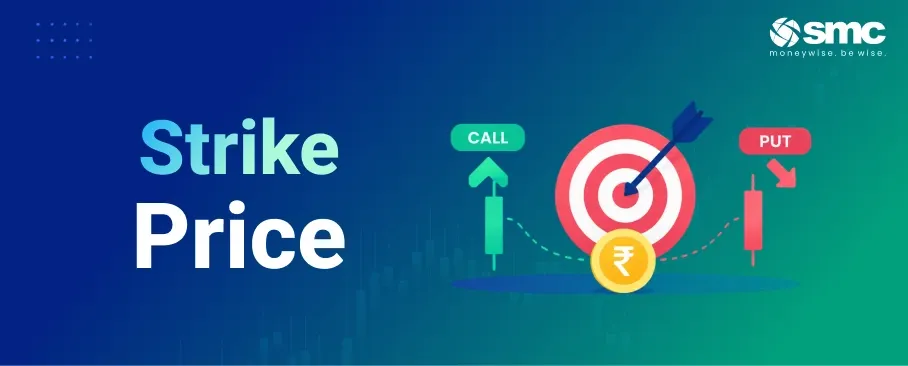


If you have ever looked at an options chain, you may have noticed different prices listed against call and put options. These prices are known as strike prices.
The strike price is one of the most important terms in options trading because it determines the price at which an option holder can buy or sell the underlying asset. It also helps determine whether an option is in-the-money, at-the-money or out-of-the-money.
Let’s understand the meaning of the strike price, how it works for call and put options, and which factors traders should consider when choosing a strike price.
What is Strike Price?
The strike price is the predetermined price at which the buyer of an options contract has the right to buy or sell the underlying asset.
It is also called the exercise price.
The treatment of the strike price depends on the type of option:
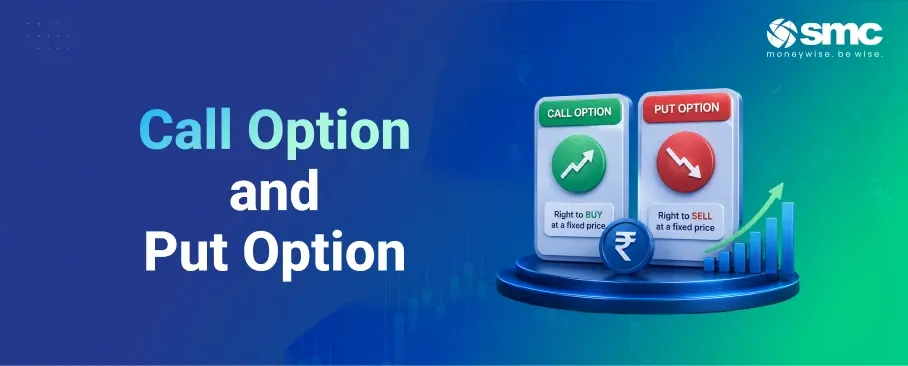
- Call option: Gives the buyer the right to buy the underlying asset at the strike price.
- Put option: Gives the buyer the right to sell the underlying asset at the strike price.
The strike price is fixed when the options contract is created and does not change during the life of that contract.
Strike Price Example
Suppose you buy a call option on a stock with a strike price of ₹100.
If the stock price rises to ₹120 at expiry, the call option has an intrinsic value of ₹20 per share before considering the premium paid.
On the other hand, if the stock price is ₹90 at expiry, buying the stock at ₹100 through the call option would not make economic sense. The option would expire out-of-the-money.
This is why understanding the meaning of the strike price is important before trading options.
What is Strike Price in Option Trading?
In options trading, the strike price serves as the reference point for determining an option's intrinsic value.
For a call option, the option has intrinsic value when the market price of the underlying asset is above the strike price.
For a put option, the option has intrinsic value when the market price is below the strike price.
For example:
However, intrinsic value is not the same as the trader's final profit or loss. The premium paid or received, along with brokerage and other applicable costs, also needs to be considered.
Strike Price in Call Options
A call option gives the buyer the right, but not the obligation, to buy the underlying asset at the strike price.
Suppose you purchase a call option with a strike price of ₹1,000.
If the underlying asset rises to ₹1,100 at expiry, the option is ₹100 in-the-money on an intrinsic-value basis.
If the asset remains below ₹1,000, the call option has no intrinsic value at expiry.
The actual profit for the option buyer depends on whether the intrinsic value exceeds the premium paid.
Strike Price in Put Options
A put option gives the buyer the right, but not the obligation, to sell the underlying asset at the strike price.
Suppose you buy a put option with a strike price of ₹1,000.
If the underlying asset falls to ₹900 at expiry, the put option has an intrinsic value of ₹100.
If the asset rises above ₹1,000, the put option has no intrinsic value at expiry.
Again, the option buyer's actual profit depends on the premium paid and other applicable costs.
Types of Strike Prices
Strike prices are commonly discussed in relation to the current market price of the underlying asset.
1. In-the-Money (ITM)
An option is in-the-money when it has intrinsic value.
- A call option is ITM when the underlying price is above the strike price.
- A put option is ITM when the underlying price is below the strike price.
2. At-the-Money (ATM)
An option is at-the-money when the strike price is close to the current market price of the underlying asset.
For example, if a stock is trading around ₹500 and the option has a strike price of ₹500, it is considered ATM.
3. Out-of-the-Money (OTM)
An option is out-of-the-money when it has no intrinsic value.
- A call option is OTM when the underlying price is below the strike price.
- A put option is OTM when the underlying price is above the strike price.
OTM options can have lower premiums, but they require a favourable price movement before expiry to develop intrinsic value.
Factors to Consider When Choosing a Strike Price
There is no single strike price that is suitable for every options trade. The choice depends on the trader's strategy, market expectations, risk tolerance and the premium involved.
1. Market View
Your expectation about the underlying asset can influence the strike price you consider.
For example, a trader expecting a significant rise in a stock may compare different call strikes based on their premiums and potential payoff.
Similarly, a trader expecting a decline may evaluate different put strikes.
2. Premium
The strike price affects the option premium.
Generally, ITM options have higher premiums than OTM options because they already have intrinsic value. OTM options may have lower premiums, but they need a favourable price movement to become profitable.
3. Time to Expiry
An option with more time remaining until expiry generally has greater time value than an otherwise similar option with less time remaining.
Therefore, the expiry date should also be considered along with the strike price.
4. Risk Tolerance
Different strike prices can result in different risk and reward profiles.
An option buyer should understand the maximum potential loss, which is generally limited to the premium paid for the option. In contrast, an option seller can face substantially higher losses depending on the strategy.
5. Volatility
Expected volatility can have a significant impact on option premiums. When implied volatility is higher, option premiums can generally be higher as well.
Therefore, looking at the strike price alone is not enough. Traders should also consider the premium and implied volatility.
Strike Price in Different Market Conditions
The relevance of different strike prices can change depending on the market environment and trading strategy.
Bullish Market
When a trader expects the underlying asset to rise, call options may be considered.
Different strike prices offer different combinations of premium, probability of finishing ITM and potential payoff. The choice depends on the trader's expectations and risk management approach.
Bearish Market
When a trader expects the underlying asset to fall, put options may be considered.
A trader may compare different put strikes based on the expected price movement, premium and time remaining until expiry.
Range-Bound Market
When the underlying asset is expected to remain within a particular range, traders may consider strategies such as an iron condor, a short straddle, or a short strangle. These strategies have different risk profiles. Short straddles and short strangles can expose traders to substantial losses if the underlying asset moves significantly.
Strike Price vs Spot Price
The strike price and spot price are two different concepts in options trading.
The relationship between the strike price and spot price helps determine whether an option is ITM, ATM or OTM.
Why is Strike Price Important?
The strike price is important because it directly affects the potential payoff and premium of an options contract.
Before entering an options trade, traders should look at:
- Current price of the underlying asset
- Strike price
- Option premium
- Expiry date
- Implied volatility
- Market expectations
- Overall risk involved
Looking at only the strike price without considering these factors can give an incomplete picture of an options trade.
Conclusion
The strike price is the fixed price at which the buyer of an options contract has the right to buy or sell the underlying asset. It is central to understanding how call and put options work.
The difference between the strike price and the underlying asset's market price helps determine whether an option is in-the-money, at-the-money or out-of-the-money. However, the strike price alone does not determine profitability. The option premium, expiry, volatility and other trading costs also matter.
If you are new to options trading, understand the payoff and risks of an options strategy before taking a position. You can also explore the educational and trading resources available through SMC Global Securities.

 1800 11 0909
 smc.care@smctradeonline.com