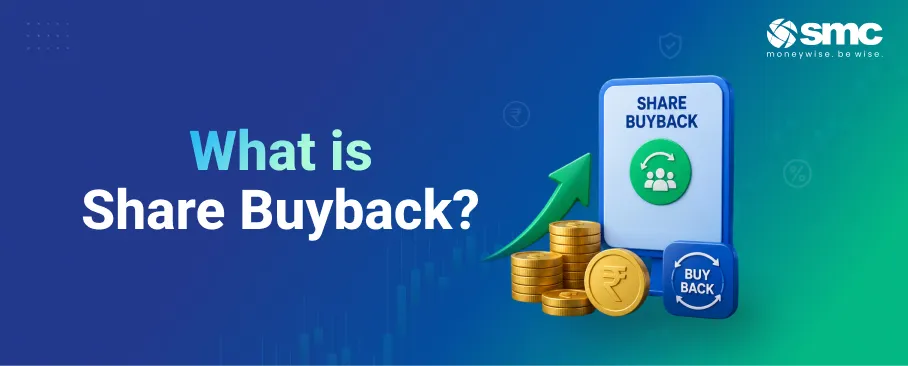


Have you ever heard a company announce a share buyback and wondered what it means? A share buyback, also known as a share repurchase, is when a company buys back its own shares from existing shareholders or on the open market. While it may seem unusual for a company to purchase its own shares, buybacks are a common corporate action used to reward shareholders, optimise capital structure, and signal confidence in the company's future.
Understanding what a share buyback is, why companies undertake buybacks, and how the process works can help investors make more informed investment decisions.
#What Is Share Buyback?
A share buyback (or buyback of shares) is a corporate action in which a company repurchases its own shares from existing shareholders or through the open market using its available resources, subject to applicable regulations.
As a result, the total number of outstanding shares decreases. This may improve financial metrics such as Earnings Per Share (EPS), although the impact on the share price depends on various factors, including market conditions and investor sentiment.
A share buyback often indicates that the company's management believes its shares are fairly valued or undervalued and that deploying excess cash towards repurchasing shares is an efficient use of capital.
#Why Do Companies Buy Back Shares?
Companies undertake share buybacks for several strategic reasons.
#1. Improve Earnings Per Share (EPS)
Since the number of outstanding shares decreases after a buyback, the company's earnings are distributed across fewer shares, which may increase Earnings Per Share (EPS).
#2. Return Surplus Cash to Shareholders
Instead of distributing excess cash through dividends, companies may choose to buy back shares. Shareholders can either participate in the buyback or continue holding their shares.
#3. Signal Confidence in the Business
A buyback announcement often reflects management's confidence in the company's financial position and long-term growth prospects.
#4. Offset Dilution
Companies that issue shares under employee stock option plans (ESOPs) may conduct buybacks to offset dilution caused by the issuance of additional shares.
#5. Optimise Capital Structure
Companies may also use buybacks to improve capital efficiency by deploying surplus cash while maintaining an appropriate balance between debt and equity.
#Types of Share Buybacks
Companies generally repurchase shares through one of the following methods:
#1. Tender Offer
In a tender offer, the company invites eligible shareholders to tender their shares at a specified price or within a price range during a defined period. If the number of shares offered exceeds the buyback size, acceptance is made in accordance with applicable regulations.
Tender offers provide greater price certainty for participating shareholders.
#2. Open Market Buyback
In an open market buyback, the company purchases shares directly on the stock exchange over a specified period. The company is not obligated to buy a fixed quantity of shares every day, and shareholders are not guaranteed that their shares will be purchased.
#How to Participate in a Share Buyback
If a company announces a tender offer buyback, eligible shareholders can generally participate by following these steps:
#1. Review the Buyback Announcement
Read the company's buyback offer and stock exchange filings carefully. Check important details such as:
- Record date
- Buyback price or price range
- Buyback size
- Eligibility criteria
- Tender period
#2. Ensure Eligible Shareholding
To participate in a tender offer, investors must generally hold eligible shares in their Demat account as of the record date announced by the company.
#3. Submit Your Tender Request
Once the buyback window opens, investors can submit their tender request through their stockbroker or trading platform by specifying the number of shares they wish to offer.
#4. Acceptance of Shares
If the number of shares tendered exceeds the buyback size, acceptance is made in accordance with the applicable regulations and the entitlement ratio.
#5. Settlement
Accepted shares are debited from the investor's Demat account, and the corresponding payment is credited after settlement. Shares that are not accepted remain in the investor's Demat account.
#Open Market Buyback vs Tender Offer
#What Does a Share Buyback Mean for Investors?
A share buyback can influence both the company and its shareholders in several ways.
#Potential Benefits
- May improve EPS.
- Can indicate management's confidence in the company's future.
- May support shareholder value by reducing the number of outstanding shares.
- Provides eligible shareholders with an opportunity to tender shares during a buyback offer.
However, the impact of a buyback varies depending on the company's financial position, valuation, and overall market conditions.
#Advantages of Share Buybacks
A share buyback can offer several benefits to both the company and its shareholders.
#1. Potential Improvement in Financial Ratios
Since the number of outstanding shares decreases after a buyback, financial metrics such as Earnings Per Share (EPS) may improve. In some cases, Return on Equity (ROE) may also benefit.
#2. Efficient Use of Surplus Cash
Companies with healthy cash reserves may use buybacks to return excess capital to shareholders rather than retain idle cash on their balance sheets.
#3. Increased Promoter Confidence
A buyback announcement may indicate that the management believes the company's shares are fairly valued or undervalued, reflecting confidence in its long-term prospects.
#4. Reduced Share Dilution
Buybacks can help offset the dilution caused by employee stock option plans (ESOPs) or other equity issuances, thereby protecting the ownership interests of existing shareholders.
#Risks and Considerations
While share buybacks offer several advantages, investors should also be aware of certain risks.
#Price Volatility
Share prices may fluctuate after a buyback announcement or upon the conclusion of the buyback programme. A buyback does not guarantee sustained price appreciation.
#Partial Acceptance
In tender offer buybacks, not all the shares offered by shareholders may be accepted if the buyback is oversubscribed.
#Business Fundamentals Matter
A buyback should not be viewed as the sole indicator of a company's strength. Investors should also evaluate factors such as earnings growth, cash flows, debt levels, and future business prospects.
#Regulatory Compliance
Share buybacks in India are governed by the Companies Act, 2013 and the applicable SEBI regulations. Companies must comply with the prescribed eligibility conditions, disclosures, and procedural requirements before undertaking a buyback.
#Things Investors Should Consider Before Participating
Before participating in a share buyback, investors should consider the following:
- Compare the buyback price with the current market price and your purchase price.
- Check the record date and ensure you are eligible to participate.
- Understand that acceptance may be partial in tender offer buybacks.
- Review the company's financial performance and the purpose behind the buyback.
- Consider the tax implications applicable at the time of the transaction.
#Taxation of Share Buybacks
The tax treatment of share buybacks is governed by the prevailing provisions of the Income-tax Act, 1961, as amended from time to time.
The tax implications for companies and shareholders may vary depending on the applicable law in force at the time of the buyback. Investors should refer to the latest tax provisions or consult a qualified tax professional before making investment decisions based on a buyback offer.
#How to Track Upcoming Share Buybacks
Investors can stay updated about upcoming share buybacks through:
- Company announcements and investor presentations
- Corporate action disclosures on the NSE and BSE websites
- SEBI filings and regulatory announcements
- Notifications from their stockbroker or trading platform
Keeping track of official announcements helps investors understand important dates such as the record date, buyback opening and closing dates, offer price, and eligibility criteria.
#Conclusion
A share buyback is an important corporate action through which companies repurchase their own shares to optimise capital structure, return surplus cash to shareholders, and potentially improve financial metrics such as Earnings Per Share (EPS). While buybacks can signal management's confidence in the business, investors should evaluate each buyback in the context of the company's overall financial health and long-term growth prospects.
Understanding what a share buyback is, how the process works, and the factors to consider before participating can help investors make more informed investment decisions.

 1800 11 0909
 smc.care@smctradeonline.com