

Whenever you invest in a mutual fund, apply for an IPO, or receive dividends, several administrative processes take place behind the scenes. These activities are managed by a Registrar and Transfer Agent (RTA), a SEBI-registered intermediary responsible for maintaining investor records, processing transactions, and facilitating communication between investors and issuers.
Although RTAs do not make investment decisions, they play a crucial role in ensuring that transactions are processed accurately and investor records remain up to date. From processing applications and updating personal details to issuing account statements and handling corporate actions, RTAs help make the investment process smooth and efficient.
In this article, we'll explore the full form of RTA, its meaning, key services, and why it is important for investors.
#What Is RTA?
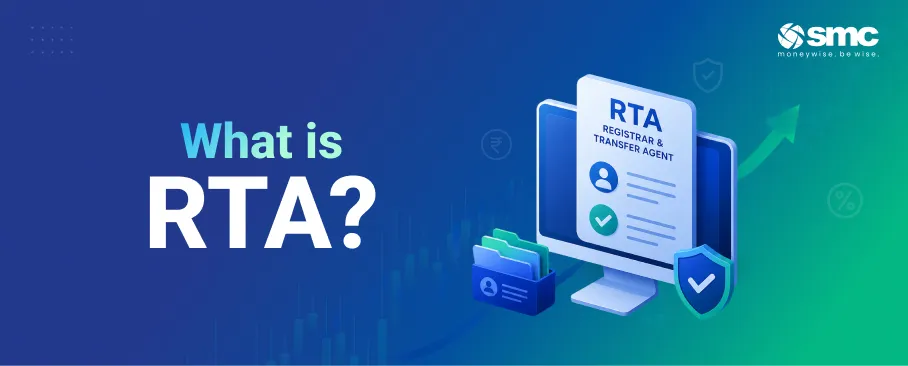
The RTA full form is Registrar and Transfer Agent. It is a SEBI-registered intermediary that manages administrative and record-keeping activities for mutual funds, listed companies, and other financial institutions.
Think of an RTA as the operational backbone of the investment process. When you invest in a mutual fund or apply for an IPO, the RTA verifies your application, updates investor records, processes transactions, and ensures that units or shares are allotted correctly.
Apart from transaction processing, RTAs also help investors update personal information, access account statements, process corporate actions, and resolve service-related queries.
#Key Registrar and Transfer Agent Services
RTAs perform several administrative functions that help ensure smooth investment operations.
#1. Maintaining Investor Records
One of the primary responsibilities of an RTA is maintaining accurate investor records. This includes tracking holdings, purchase and redemption transactions, nominee details, bank account information, contact details, and other account-related information.
Whenever an investor updates personal information, such as a change in address, bank account, or nominee, the RTA records and processes these changes.
#2. Processing Investment Transactions
RTAs process various investor requests, including:
- Mutual fund purchases
- Redemptions
- Scheme switches
- Systematic Investment Plans (SIPs)
- IPO applications (where applicable)
They verify applications, process eligible requests, coordinate with the fund house or issuer, and ensure transactions are completed in accordance with applicable regulations and timelines.
#3. KYC Facilitation and Compliance
RTAs assist investors with Know Your Customer (KYC) requirements by collecting and processing the necessary documents. They facilitate the KYC process in accordance with SEBI regulations and coordinate with the relevant KYC Registration Agencies (KRAs), wherever applicable.
If any document or information requires updating, investors are informed so that their records remain compliant with regulatory requirements.
#4. Processing Corporate Actions
RTAs assist companies and mutual funds in executing various corporate actions, including:
- Dividend payouts
- Bonus issues
- Rights issues
- Stock splits
- Redemptions
- Other investor-related corporate actions
These activities are carried out based on instructions received from the issuer or the Asset Management Company (AMC).
#5. Consolidated Account Statements (CAS)
RTAs help generate and distribute #Consolidated Account Statements (CAS) to investors as per the applicable regulatory framework.
The CAS provides a consolidated view of an investor's holdings and transactions across multiple mutual funds and other eligible investments, making portfolio tracking easier.
#6. Investor Support Services
RTAs also provide customer support through online portals, mobile applications, email, and helplines.
Investors can use these platforms to:
- Download account statements
- Update personal details
- Register or modify nominees
- Track transaction status
- Raise service requests or grievances
#RTA in India: Who They Are and What They Do
India has several SEBI-registered Registrar and Transfer Agents that provide services to mutual funds, listed companies, pension schemes, Alternative Investment Funds (AIFs), and other financial institutions.
Among the most well-known RTAs are Computer Age Management Services (CAMS) and KFin Technologies, which service a large number of Asset Management Companies (AMCs) across the country.
As investment processes become increasingly digital, RTAs now offer a wide range of online services, including e-KYC support, online service requests, digital account statements, nominee updates, and paperless transaction facilities, making investor servicing faster and more convenient.
#Why RTA Matters to Investors
Understanding the role of an RTA can make your investment journey more convenient. Here are some of the key benefits:
#Faster and Accurate Transactions
RTAs help process investment applications, redemptions, and other service requests efficiently, reducing the chances of errors and delays.
#Easy Account Updates
Whether you want to update your bank account, contact details, nominee information, or other personal records, RTAs provide a centralised platform for making these changes.
#Better Portfolio Tracking
Through Consolidated Account Statements (CAS), investors can view their holdings across multiple mutual funds and eligible investments in a single statement, making portfolio monitoring easier.
#Dedicated Investor Support
RTAs offer multiple support channels, including online portals, email, and customer care services, helping investors resolve account-related queries and service requests quickly.
By managing these administrative responsibilities, RTAs allow Asset Management Companies (AMCs) to focus on investment management while ensuring investors receive efficient service.
#RTA vs AMC: What's the Difference?
Although both RTAs and Asset Management Companies (AMCs) play important roles in mutual fund investing, their responsibilities are quite different.
While the AMC manages the mutual fund's investments and portfolio strategy, the RTA ensures that investor transactions, records, and servicing functions are handled efficiently.
#How to Identify Your RTA
If you want to know which RTA manages your investments, you can:
- Check your mutual fund account statement or Consolidated Account Statement (CAS).
- Visit the official website of your Asset Management Company (AMC).
- Log in to the investor portal of your mutual fund.
- Check the service details provided by RTAs such as CAMS or KFin Technologies.
Knowing your RTA can help you quickly access account statements, update personal information, and resolve service-related issues.
#The Future of RTA Services
With the increasing adoption of digital technology, RTAs continue to improve the investor experience by offering faster and more convenient services.
Some of the key developments include:
- Paperless account servicing
- Online KYC support and document submission
- Digital account statements
- Online nominee registration and modification
- Faster processing of investor service requests
- Improved cybersecurity measures to safeguard investor data
- Better integration with AMCs, depositories, and digital investment platforms
These technological advancements are making investment administration more efficient while improving convenience for investors.
#RTA Full Form: Quick Recap
- #RTA full form: Registrar and Transfer Agent
- #RTA meaning: A SEBI-registered intermediary that manages investor records and administrative services.
- #Primary role: Processing transactions, maintaining investor records, facilitating corporate actions, and supporting investor servicing.
- #Key services: Record maintenance, transaction processing, KYC facilitation, account statements, corporate actions, and grievance handling.
#Conclusion
A #Registrar and Transfer Agent (RTA) plays a vital role in the investment ecosystem by handling the administrative responsibilities that keep investment transactions running smoothly. From maintaining investor records and processing transactions to facilitating corporate actions and providing customer support, RTAs help ensure a seamless experience for investors.
Although they operate behind the scenes, their contribution is essential for maintaining accuracy, transparency, and regulatory compliance. Understanding the role of an RTA can help investors know where to turn for account-related services and make managing investments much more convenient.



 1800 11 0909
 smc.care@smctradeonline.com