


When you hear market experts suddenly say, “There’s heavy short covering today,” what exactly does that mean? If you’re curious about the stock market or have just started trading, understanding the meaning of short covering is an important step. It’s one of those terms that sounds complex but becomes simple once broken down properly.
In this guide, we’ll explain what short covering is, why it happens, how it can affect prices, whether short covering is bullish or bearish, and why traders monitor it. We’ll also look at how short covering can be identified using price and open-interest data.
#What is Short Covering?
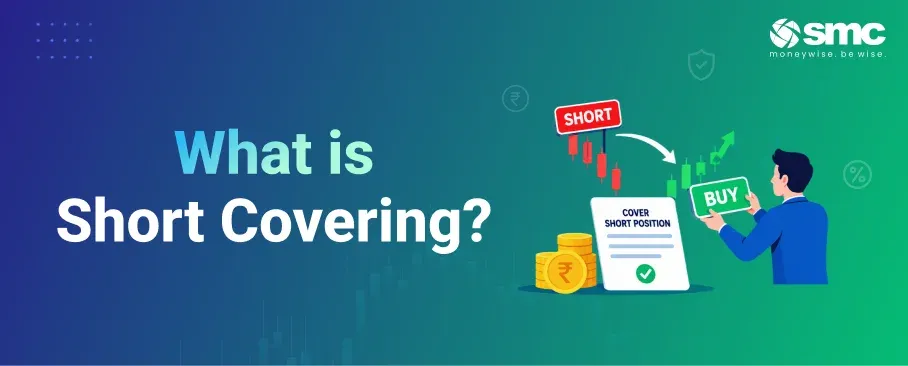
Let’s start with the basics. Short covering meaning is directly related to short selling. In simple terms, short selling involves selling a security with the expectation that its price will decline, allowing the trader to buy it back later at a lower price and potentially profit from the difference.
For example, let’s say a trader short sells a stock at ₹100. If the price falls to ₹90, the trader can buy it back and potentially make ₹10 per share, before costs. However, if the price rises instead, the trader may incur a loss when buying back the shares.
Short covering happens when a trader buys back a security to close an existing short position. This can happen because the trader wants to book a profit after a price decline, or because the price is moving against the short position and the trader wants to limit further losses.
That buying to close a short position is known as short covering.
#Is Short Covering Bullish or Bearish?
A common question is: Is short covering bullish or bearish?
Short covering is generally considered bullish in the immediate term because closing a short position requires buying. However, it does not necessarily mean that the underlying stock or market has entered a sustained bullish trend.
Here’s the nuance:
- If short covering occurs alongside fresh long buying, it can support a stronger upward move.
- If the rise is primarily driven by short sellers exiting their positions, the move may be temporary.
- Broader factors such as fundamentals, market sentiment, volume, and price structure should also be considered.
Therefore, short covering can be bullish as a price-action signal, but it should not automatically be interpreted as confirmation of a long-term bullish outlook.
#What Triggers Short Covering?
Several situations can trigger short covering:
- #Positive news: Better-than-expected earnings, a major business development or other favourable news can cause a stock to rise and prompt short sellers to exit.
- #Technical breakouts: A move above an important resistance level may force some traders to reassess their short positions and cover them.
- #Policy announcements: Government decisions, RBI announcements or other policy developments can result in sharp market movements and trigger position adjustments.
- #Change in market sentiment: A sudden shift towards positive sentiment can push prices higher and encourage short sellers to close their positions.
- #Risk or margin requirements: Traders may close short positions when losses increase or when they need to reduce exposure to meet their risk or margin requirements.
Understanding these triggers can help traders put a price move into context rather than assuming that every sharp rise is caused by short covering.
#Why Does Short Covering Matter?
Understanding short covering meaning can help traders interpret sharp price movements more effectively.
Short-covering activity can contribute to fast upward moves, particularly when many short positions are being closed at the same time. Recognising the possibility of short covering can help traders:
- Distinguish between a move driven by short-position exits and fresh buying.
- Avoid assuming that every sharp rally represents a lasting change in trend.
- Identify situations where price and derivatives data may warrant closer attention.
- Assess potential trading setups alongside other technical and fundamental factors.
Traders often monitor price and open interest (OI) together when analysing derivatives activity. A decline in open interest alongside a rise in price is commonly interpreted as an indication of short covering, although OI data alone cannot establish the reason for a price move.
#Short Covering vs Long Buying
It’s important to distinguish between short covering and long buying because both involve buying but represent different positions and intentions:
- #Short covering: A trader buys back a security to close an existing short position.
- #Long buying: A trader buys a security to establish or increase a long position, generally expecting the price to rise.
A price increase can therefore result from either short covering, fresh long buying, or a combination of both. A rally driven mainly by short covering may lose momentum once short positions have been closed, whereas fresh buying can provide additional demand.
#How to Spot Short Covering?
If you want to identify potential short covering stocks, looking at price and open interest together can provide useful clues, particularly in the futures market.
Some commonly monitored signs include:
- #Price rises while open interest falls: This combination is commonly associated with short covering because existing positions may be getting closed as prices move higher.
- #Sharp upward price movement: A sudden rise can indicate that short sellers are exiting positions, although price movement alone cannot confirm short covering.
- #Change in open interest: A noticeable decline in OI during a price rise can strengthen the possibility that short positions are being closed.
- #Volume and broader market activity: Higher trading activity can provide additional context, but volume alone cannot determine whether the buying is from short covering or fresh long positions.
It is important to remember that market data generally cannot tell you with certainty whether every individual trade represents short covering. Traders therefore use price, OI, volume and broader market conditions together.
#Common Misunderstandings
Let’s clear up a few common doubts about short covering:
#1. Short covering is not always a long-term bullish signal
Short covering creates buying pressure because short sellers need to buy back their positions. However, it does not guarantee that the stock has entered a sustained uptrend.
#2. Short covering is not the same as fresh buying
The purpose is different. Short covering closes an existing short position, while long buying creates or increases a long position.
#3. Not every price rise is short covering
A stock can rise because of fresh long buying, positive news, changing market expectations or other factors. Price and OI should be analysed together before drawing conclusions.
#4. Short covering does not guarantee a lasting rally
Once short sellers have exited, that source of buying demand can diminish. A sustained rally generally requires continued buying interest and favorable market conditions.
#Short Covering: Trading Considerations
Traders may incorporate short-covering signals into their broader trading strategy. For example:
- #Trend reversal trades: Traders may look for a combination of rising prices, falling OI, and other technical confirmations before considering a potential reversal setup.
- #Follow-through trades: If short covering is accompanied by fresh buying and the broader trend supports the move, traders may look for continuation opportunities.
- #Avoid chasing sharp rallies: A rapid move caused mainly by position covering can reverse once the covering activity fades.
However, trading around short covering can be risky because these moves may happen quickly and can be highly volatile. Traders should define their entry, stop-loss, and position size in advance rather than relying solely on an OI signal.
#Conclusion
To wrap up, short covering may seem like market jargon at first, but it is a useful concept for understanding movements in the stock and derivatives markets. It occurs when traders who previously took short positions buy back the security to close those positions.
When prices rise while open interest declines, traders often interpret the combination as potential short covering. However, it should not be viewed as a standalone signal. Fresh buying, news, market sentiment, and broader price trends can also influence the move.
So, the next time you hear that a stock is rising on short covering, you’ll know what it means and what data to look at before drawing a conclusion. A disciplined approach, proper position sizing, and risk management remain important when trading volatile market moves.
If you want to learn more about market trends and trading concepts, you can explore the resources available from SMC Global Securities.






 1800 11 0909
 smc.care@smctradeonline.com