
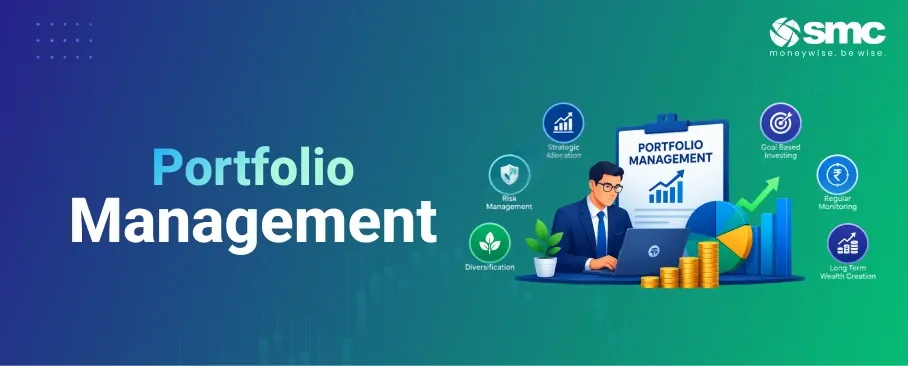


Portfolio Management Services (PMS) offer a personalised approach to investing. If you are wondering what PMS is and how it differs from mutual funds, the main distinction lies in how your investments are managed and owned.
PMS is designed primarily for high-net-worth individuals (HNIs) who want professional portfolio management tailored to their financial goals, risk appetite and investment horizon. However, it comes with a higher minimum investment requirement, specific fee structures and market risks.
This guide explains the full form of PMS in finance, how PMS investing works, its advantages and disadvantages, and how it compares with mutual funds and other investment options.
What is PMS (Portfolio Management Services)?
PMS stands for Portfolio Management Services. It is an investment service in which a professional portfolio manager manages a client's portfolio according to an agreed investment strategy and financial objectives.
Unlike mutual funds, where investors own units of a pooled fund, PMS investors generally hold the underlying securities directly in their demat accounts. The portfolio manager manages these investments according to the selected PMS arrangement.
Key features of PMS include:
- Personalised management: Portfolio construction can reflect the investor's goals and risk profile.
- Minimum investment: SEBI generally requires a minimum investment of ₹50 lakh per client.
- Direct ownership: Investors generally own the underlying securities in their accounts.
- Professional oversight: Investment decisions follow the agreed investment mandate.
PMS offers flexibility in portfolio construction, but returns are not guaranteed. Investors remain exposed to market risks and can incur losses.
Types of Portfolio Management Services
There are three common PMS service models.
1. Discretionary PMS
The portfolio manager makes investment decisions and executes transactions on the client's behalf within the agreed mandate. The investor does not need to approve every transaction individually.
2. Non-Discretionary PMS
The portfolio manager recommends investments, but the client must approve decisions before transactions are executed.
3. Advisory PMS
The portfolio manager provides investment advice, while the client makes and executes investment decisions. The specific responsibilities depend on the agreement.
Discretionary PMS may suit investors who prefer professional management with limited involvement in individual decisions. Non-discretionary and advisory arrangements may appeal to those who want greater control.
Portfolio Management Services in India: SEBI Regulations
Portfolio management services in India are regulated by the Securities and Exchange Board of India (SEBI) under the SEBI (Portfolio Managers) Regulations, 2020, along with applicable amendments and directions.
Important requirements include:
- Registration: Portfolio managers must be registered with SEBI to provide regulated PMS services.
- Minimum investment: The general minimum investment requirement is ₹50 lakh per client.
- Disclosure: Investors receive information about investment strategies, risks, fees and other relevant terms.
- Custody: Portfolio managers are generally required to appoint a custodian for securities they manage or administer, subject to applicable exceptions.
- Reporting and compliance: Providers must follow applicable disclosure, reporting and compliance requirements.
Before investing, verify the provider's SEBI registration and review its investment mandate, fees and risk disclosures.
For details, visit the SEBI Investor website.
What is PMS Investment?
PMS investment involves allocating money to a professionally managed portfolio rather than investing in units of a pooled mutual fund scheme.
The process generally includes:
- Completing KYC and other onboarding formalities.
- Discussing investment goals, risk tolerance and time horizon.
- Selecting a PMS provider and investment approach.
- Reviewing and signing the required agreements.
- Funding the portfolio with at least ₹50 lakh, subject to applicable rules.
- Reviewing holdings, transactions and performance reports.
The underlying securities are generally held in the investor's demat account. Investors can view individual holdings, but they also directly bear the gains and losses associated with their portfolios.
PMS vs Mutual Fund
Understanding the difference between PMS and mutual funds can help you choose an option that suits your needs.
Which is Better: PMS or Mutual Funds?
PMS may suit investors with at least ₹50 lakh to invest who want a professionally managed portfolio with direct ownership of securities. However, fees can be higher, and concentrated portfolios can increase risk.
Mutual funds may be more suitable for investors who want an accessible investment option, diversification and the convenience of investing through lump sums or SIPs.
Neither option guarantees better returns. The right choice depends on your financial goals, risk appetite, costs and preferred level of involvement.
Who Should Consider Portfolio Management Services in India?
Portfolio management services in India may be worth considering for investors who:
- Have at least ₹50 lakh available to invest.
- Want professional management under a defined investment approach.
- Understand the risks of investing directly in securities.
- Can evaluate the provider's investment strategy, track record and fees.
- Have an appropriate investment horizon and can tolerate market fluctuations.
PMS may not suit investors who need immediate access to their entire investment, cannot tolerate substantial losses or are committing most of their savings to a single portfolio.
Advantages and Drawbacks of PMS
Advantages of Portfolio Management Services
- Professional management: Investment decisions are made or recommended according to the agreed mandate.
- Personalised approach: Portfolio construction can reflect the investor's goals, risk tolerance and time horizon.
- Direct ownership: Investors generally hold the underlying securities in their own demat accounts.
- Portfolio visibility: Investors can review individual holdings and transactions through the applicable reporting arrangements.
These features provide flexibility, but they do not guarantee higher returns.
Drawbacks of PMS
- High entry requirement: The ₹50 lakh minimum investment makes PMS inaccessible to many investors.
- Fees: Management fees, performance-linked fees and other expenses can reduce net returns.
- Market risk: Investors directly bear losses on their portfolio holdings. Concentrated portfolios can be particularly volatile.
- Liquidity considerations: Selling securities depends on their liquidity and prevailing market conditions.
- Dependence on the manager: Performance is influenced by investment decisions, strategy and market conditions.
Review the fee agreement and investment approach carefully before committing funds.
PMS vs Mutual Fund: Tax Treatment in India
PMS and mutual funds do not necessarily have the same tax treatment. In PMS, investors generally own individual securities, so taxation depends on the asset, transaction and applicable tax provisions. Mutual fund taxation depends on the fund category and relevant rules.
For qualifying listed equity shares and equity-oriented mutual fund units, the broad capital gains rates for transfers on or after 23 July 2024 are:
- Short-term capital gains: Gains on investments held for 12 months or less are generally taxed at 20%, plus applicable cess and surcharge.
- Long-term capital gains: Gains on investments held for more than 12 months are generally taxed at 12.5% on aggregate eligible gains exceeding ₹1.25 lakh in a financial year, plus applicable cess and surcharge.
These rates do not apply uniformly to every security or fund. Debt mutual funds acquired on or after 1 April 2023 may be taxed at the investor's applicable slab rate under applicable provisions. Other securities can follow different rules.
Therefore, when comparing PMS and mutual funds, consider the actual investments held rather than assuming that both structures have identical tax treatment. Consult a tax professional for your specific portfolio.
PMS vs AIF vs SIF
Investors with larger portfolios may also explore Alternative Investment Funds (AIFs) and Specialised Investment Funds (SIFs).
- Alternative Investment Funds (AIFs): These are privately pooled investment vehicles registered with SEBI. The minimum investment generally starts at ₹1 crore, subject to specified exceptions and applicable rules. Strategies vary by category.
- Specialised Investment Funds (SIFs): These offer investment strategies beyond conventional mutual fund offerings. The general minimum investment threshold is ₹10 lakh across SIF strategies, subject to applicable exceptions.
- PMS: This provides individual portfolio management, with investors generally owning the underlying securities directly.
Each option has different eligibility requirements, costs and risks. Review the relevant offer documents before investing.
How to Start a PMS Investment
If PMS aligns with your financial goals, follow these steps:
- Choose a registered provider: Verify its SEBI registration and investment approach.
- Complete KYC and risk assessment: Provide the required documents and discuss your objectives.
- Review the agreement: Understand the mandate, fees, risks and exit terms.
- Select the service model: Decide whether discretionary, non-discretionary or advisory services suit your needs.
- Fund the portfolio: Meet the minimum investment requirement and complete account formalities.
- Monitor performance: Review holdings, costs, risks and performance reports regularly.
Do not select a PMS provider solely on past returns. Consider its investment process, risk management and suitability for your financial situation.
Conclusion
Portfolio Management Services offer professional investment management for investors seeking a personalised approach. With a minimum investment requirement of ₹50 lakh, PMS is primarily designed for high-net-worth individuals who understand market risks and can assess the associated costs.
Mutual funds may be more accessible for investors who prefer pooled investments and scheme-level diversification. PMS, mutual funds, AIFs and SIFs serve different needs, so your choice should depend on your goals, risk tolerance and financial situation.
Before investing, review the provider's registration, investment mandate, fees and disclosures. SMC Global Securities offers financial market resources to help investors understand investment options and make informed decisions.



 1800 11 0909
 smc.care@smctradeonline.com