


P2P lending, or peer-to-peer lending, is an alternative way to borrow and invest money without going through a traditional bank. It connects people who need loans with individuals willing to lend money and earn interest.
In India, P2P lending has gained attention as digital platforms have made it easier for borrowers and lenders to connect. For borrowers, it offers another source of credit. For lenders, it provides an opportunity to earn interest by lending directly to other individuals.
P2P lending carries a different level of risk compared with traditional fixed-income options such as fixed deposits. Since lenders are directly exposed to borrower defaults, neither the principal nor the interest earned is guaranteed.
Let's understand what P2P lending means, how it works in India, its benefits, risks and the returns lenders can expect.
What Is P2P Lending?
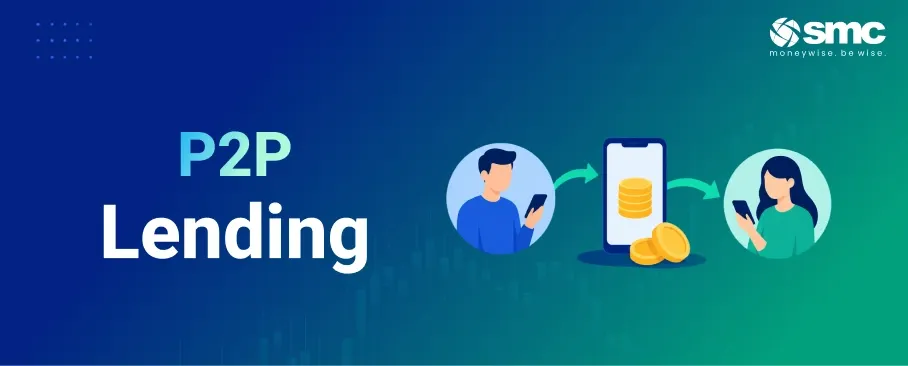
P2P lending, also known as peer-to-peer lending, is a form of lending where individuals lend money to other individuals or businesses through an online platform. These platforms act as intermediaries, connecting borrowers seeking funds with lenders seeking to earn interest.
Unlike traditional lending, where a bank or financial institution lends money from its own pool of funds, P2P lending allows individuals to lend directly to borrowers. The platform facilitates the process, including borrower assessment, loan matching, documentation and repayment collection.
For example, suppose a borrower needs ₹50,000 for a personal expense. They can apply through a P2P lending platform. After assessing the borrower's profile, the platform may list the loan for potential lenders. One or more lenders can contribute towards the loan, and the borrower repays the amount with interest over the agreed period.
In this arrangement, the lender earns interest if the borrower makes repayments as scheduled. However, if the borrower defaults, the lender may lose part or all of the amount lent.
In simple terms, P2P lending allows individuals to lend money to borrowers through an online platform that facilitates the loan process and repayment collection.
How Does P2P Lending Work in India?
P2P lending platforms bring borrowers and lenders together. The platform acts as an intermediary and facilitates the lending process, but the money is lent by individuals, not by the platform itself.
Here is how the process generally works:
- Borrower applies for a loan: A person who needs money registers on a P2P lending platform and submits details such as income, employment, existing loans and the amount required.
- Platform assesses the borrower: The platform evaluates the borrower's credit profile and repayment capacity. It may also assign a risk category or credit score.
- Loan request is listed: Once assessed, the borrower's loan request is made available to eligible lenders on the platform.
- Lenders choose borrowers: Individuals interested in lending can review available loan requests and decide how much they want to lend. A loan may receive contributions from multiple lenders.
- Loan amount is disbursed: Once the required amount is arranged, the money is transferred to the borrower through the prescribed banking and escrow arrangements.
- Borrower repays the loan: The borrower repays the loan, usually through instalments that include principal and interest. The platform facilitates the collection of repayments and transfers the respective amounts to lenders through designated escrow arrangements.
Example: Suppose a person wants to borrow ₹1 lakh. Instead of taking the entire amount from a single lender, the loan could be funded by four lenders, each contributing ₹25,000. The borrower repays the loan with interest, and each lender receives their share of the repayment.
The actual process, loan terms and interest rates vary across platforms. Also, lenders should remember that repayment is not guaranteed. If a borrower defaults, the lenders bear the resulting loss.
RBI Rules and Regulations for P2P Lending in India
P2P lending in India is regulated by the Reserve Bank of India (RBI). Platforms that facilitate peer-to-peer lending must register with the RBI as a Non-Banking Financial Company - Peer-to-Peer Lending Platform (NBFC-P2P).
The RBI issued the updated NBFC-P2P Directions, 2025 on 28 November 2025. These rules define what P2P platforms can do and set limits on lending and borrowing.
Some important rules include:
- RBI registration: A company cannot operate a P2P lending platform without obtaining a Certificate of Registration from the RBI.
- Platforms cannot lend their own money: Their role is limited to connecting borrowers and lenders. They cannot use lenders' funds for their own lending activities.
- No assured returns: Platforms cannot guarantee repayment of principal or interest or promise assured returns to lenders.
- Lender exposure limit: A lender's total exposure across all P2P platforms cannot exceed ₹50 lakh. If the amount exceeds ₹10 lakh, the lender must provide a certificate from a practising CA confirming a net worth of at least ₹50 lakh.
- Borrower limit: A borrower's total outstanding loans across P2P platforms cannot exceed ₹10 lakh.
- Single-borrower limit: A lender cannot lend more than ₹50,000 to the same borrower across all P2P platforms.
- Loan tenure: The maturity of a P2P loan cannot exceed 36 months.
- No credit guarantees: P2P platforms cannot provide credit guarantees or assure lenders of principal repayment or interest payments.
- No secured lending: NBFC-P2P platforms cannot facilitate secured lending through their platforms.
- Portfolio disclosures: Platforms must disclose relevant portfolio performance information, including non-performing assets (NPAs), to lenders.
The RBI requires funds transferred between lenders and borrowers to be routed through designated escrow accounts operated by a bank-promoted trustee. Separate escrow arrangements are maintained for funds received from lenders and borrowers. This helps ensure that the platform does not directly use these funds for its own activities.
These regulations establish the framework within which P2P lending platforms must operate. However, RBI registration does not mean that the loans are guaranteed or that lenders are protected against losses arising from borrower defaults. Lenders remain responsible for assessing the risks before committing their money.
Benefits of P2P Lending
P2P lending offers certain advantages to both borrowers and lenders. However, the benefits depend on the platform, the loan terms, and the borrower's credit profile.
Benefits for Borrowers
- Alternative source of credit: Borrowers can explore P2P loans as another option when looking for funds.
- Convenient application process: Applications and documentation are generally handled online, reducing the need for multiple physical visits.
- Flexible loan options: Borrowers may find different loan amounts, interest rates and repayment tenures depending on their profile and platform rules.
- Potentially competitive interest rates: Borrowers with a strong credit profile may receive attractive loan offers, depending on lender demand and platform pricing.
Benefits for Lenders
- Opportunity to earn interest: Lenders can earn interest by lending money to borrowers through a P2P platform.
- Choice of borrowers: Depending on the platform, lenders can review borrower profiles, credit scores, interest rates and loan requirements before making a decision.
- Diversification: Lenders can distribute their money across multiple borrowers, helping reduce their exposure to any single borrower. However, diversification cannot eliminate the risk of defaults.
- Online access: The process of registering, reviewing loan requests and tracking repayments can be managed through a digital platform.
Risks of P2P Lending
While P2P lending can offer an opportunity to earn interest, it comes with risks that lenders should understand before committing their money.
1. Borrower Default Risk
This is one of the biggest risks in P2P lending. A borrower may fail to repay the loan on time or may stop making payments altogether. In such cases, lenders may lose part or even the entire amount they have lent.
2. No Guaranteed Returns
P2P lending platforms cannot guarantee repayment of the principal or payment of interest. The actual return depends on borrower repayments, defaults and applicable fees. A higher advertised interest rate does not necessarily mean higher actual returns.
3. Limited Liquidity
Money lent through a P2P platform remains subject to the agreed loan tenure and repayment schedule. Unlike savings accounts or other liquid investments, lenders may not be able to access their money whenever required. RBI regulations also prohibit platforms from offering assured liquidity or exit options.
4. Credit Assessment Risk
Platforms assess borrowers based on available financial and credit information. However, even a borrower with a good credit score can default. Credit assessment reduces uncertainty but cannot eliminate the risk of non-payment.
5. Platform and Operational Risk
Lenders depend on the platform for transaction facilitation, record-keeping and repayment collection. They should understand the platform's loan servicing and recovery processes, along with the arrangements in place to ensure continued servicing if the platform ceases operations.
What Returns Can You Expect from P2P Lending?
The returns from P2P lending depend on the interest rate offered by borrowers, the amount lent, loan tenure, defaults and platform fees. Unlike a fixed deposit, P2P lending does not offer a guaranteed rate of return.
For example, suppose you lend ₹10,000 at an annual interest rate of 12% for one year. If the entire principal remains outstanding for the full year and the borrower makes all payments as agreed, you could earn ₹1,200 in gross interest.
However, if the borrower repays the principal through monthly instalments, the actual interest earned will be lower as the outstanding loan amount reduces over time. Platform fees and applicable taxes can further affect your net returns.
It is therefore important to look beyond the advertised interest rate. Check the platform's historical default data, recovery performance, fees and the risk profile of the borrowers before lending.
Also, interest earned through P2P lending is generally taxable under the head 'Income from Other Sources' and is taxed as per the applicable slab rates.
How to Choose a P2P Lending Platform in India?
If you are considering P2P lending in India, choosing the right platform is an important first step. Here are a few things to check:
- Check RBI registration: Make sure the platform is registered with the RBI as an NBFC-P2P. You can verify its registration details before signing up.
- Understand borrower profiles: Check how the platform assesses borrowers and what information it shares with lenders.
- Review default and recovery data: Look at the platform's reported non-performing assets (NPAs), overdue loans and recovery performance.
- Check fees and charges: Understand the platform's charges and how they affect your net returns.
- Check recovery mechanisms: Understand how the platform handles overdue payments, borrower defaults and recovery proceedings. Check whether it provides regular updates on recovery efforts.
- Understand the loan terms: Review the interest rate, repayment schedule, tenure and conditions before lending.
- Do not rely only on advertised returns: Higher interest rates may come with higher borrower risk. Compare the potential return with the possibility of losing your money.
Also, avoid platforms that promise fixed or assured returns. RBI rules do not allow NBFC-P2P platforms to guarantee repayment or interest to lenders.
Is P2P Lending a Good Investment Option?
P2P lending may appeal to people looking for an alternative way to earn interest on their money. However, it should not be treated as a substitute for fixed deposits or other investments that offer defined repayment terms.
The possibility of earning higher interest comes with the risk of borrower defaults, delayed repayments and loss of capital. While spreading your money across multiple borrowers can help diversify exposure, it cannot eliminate credit risk or guarantee positive returns.
Before participating, assess your ability to bear losses, understand the platform's rules and avoid committing money that you may need in the short term. P2P lending is best approached with a clear understanding of the risks rather than just the potential returns.
Conclusion
P2P lending has created another channel for borrowers to access credit and for individuals to lend money in return for interest. With RBI-regulated NBFC-P2P platforms, the process operates within a defined regulatory framework.
However, RBI registration does not guarantee returns or protect lenders from borrower defaults. Before lending, understand the risks, check the platform's registration and review the loan terms carefully. The potential interest should always be weighed against the risk of losing your money.

 1800 11 0909
 smc.care@smctradeonline.com