
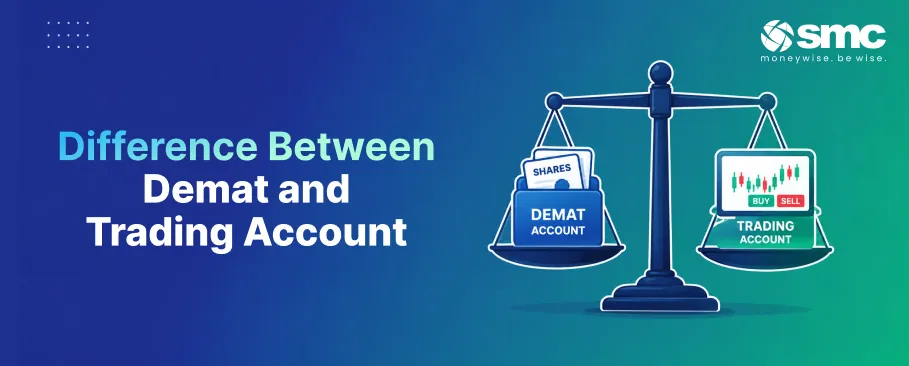


If you’re planning to invest in stocks, you’ll often hear about Demat and trading accounts. Although they work together, they serve different purposes. A Demat account is used to hold your securities electronically, while a trading account helps you buy and sell them in the market.
Understanding the difference between the two can make it easier to manage your investments and choose the right account setup.
What Is a Demat Account?
A Demat account is an account used to hold securities in electronic form. Your shares, bonds, ETFs and other eligible securities can be held in this account instead of physical certificates.
Think of it as a digital locker for your investments. Once you buy shares for delivery, they are credited to your Demat account after the applicable settlement process is completed.
A Demat account is maintained through a Depository Participant (DP) registered with a depository such as NSDL or CDSL.
What Is a Trading Account?
A trading account allows you to place buy and sell orders in the stock market through a stock broker.
For example, if you want to buy 10 shares of a company, you use your trading platform to place the order. Once the trade is executed and the applicable settlement is completed, the shares purchased for delivery are credited to your Demat account.
In simple terms:
Trading account = Buy and sell
Demat account = Hold securities
Why Is the Difference Between Demat and Trading Account Important?
The two accounts are connected, but they perform different functions.
A trading account acts as the link between you and the stock market, while the Demat account holds your securities electronically.
For investors buying shares for delivery, both accounts generally work together:
Bank account → Trading account → Stock exchange → Demat account
When you sell your shares, the process works in reverse. The shares are debited from your Demat account, and the sale proceeds are credited through the applicable settlement process.
Demat Account vs Trading Account
Do You Need Both a Demat and a Trading Account?
For buying shares for delivery, investors generally need both a Demat account and a trading account.
However, a Demat account is not required for every type of market transaction. For example, certain derivative trades can be executed through a trading account without taking delivery of shares in a Demat account.
So, the requirement depends on what you want to trade or invest in.
How Do Demat and Trading Accounts Work Together?
Suppose you want to buy 10 shares of a company at ₹500 each.
- You maintain ₹5,000 through the linked banking/trading arrangement.
- You place the order through your trading account.
- The stock exchange matches and executes the order.
- After the applicable settlement process is completed, the shares are credited to your Demat account.
- When you later sell the shares, they are debited from your Demat account, and the sale proceeds are settled through the linked account.
This is how the two accounts work together to complete a typical delivery-based share transaction.
How to Open a Demat and Trading Account?
You can generally open both accounts through a SEBI-registered stock broker and Depository Participant.
1. Choose a Broker and DP
Compare factors such as brokerage, account charges, platform features, research tools and customer support before choosing a provider.
2. Submit Your Details
You will generally need your PAN, identity/address proof, and bank details for the account opening and KYC process. Additional documents may be required depending on the services you choose.
3. Complete KYC
Complete the applicable KYC and verification process. Depending on the intermediary, this can generally be completed digitally.
4. Complete the Account-Opening Formalities
Accept the relevant terms and agreements and complete the required declarations and verification.
5. Receive Your Account Details
Once your application and KYC are approved, you receive your Demat and trading account details and can access the broker's trading platform.
Demat Account and Trading Account: Key Takeaway
The easiest way to remember the difference is:
Demat account → Holds your securities
Trading account → Helps you trade
For delivery-based equity investing, the two work together. The trading account helps execute your order, while the Demat account holds the shares once they are delivered.
What Can You Do With a Demat and Trading Account?
Once your accounts are active, you can use them for several investment and trading activities, depending on the services offered by your broker.
- Buy and hold shares: Purchase shares for delivery and hold them in your Demat account.
- Sell existing holdings: Sell securities held in your Demat account through your trading account.
- Invest in ETFs: Buy and sell eligible ETFs through the exchange.
- Participate in IPOs: Apply for eligible IPOs through the available application process.
- Pledge securities: Eligible securities can be pledged for permitted purposes, subject to applicable rules and broker terms.
- Track your portfolio: Monitor your holdings, transactions and account statements through your broker or DP platform.
What Are the Charges?
Demat and trading accounts can have different types of charges.
A Demat account may involve annual maintenance charges (AMC), depository-related charges and transaction charges for certain activities.
A trading account may involve brokerage, exchange transaction charges, Securities Transaction Tax (STT), GST, stamp duty and other applicable statutory charges.
The exact charges vary between service providers, so check the broker's latest fee structure before opening an account.
What Happens If You Close One Account?
The impact depends on which account you close.
If you close your trading account, you may no longer be able to place trades through that broker, but your securities can continue to remain in your Demat account if it remains active.
If you close your Demat account, you cannot continue to hold securities in that account. Before closing it, you need to transfer or otherwise deal with the securities held in it in accordance with the applicable process.
Therefore, check your holdings and pending transactions before requesting account closure.
Things to Keep in Mind
Before choosing a broker, compare:
- Brokerage and other applicable charges
- Demat account maintenance fees
- Trading platform and app
- Ease of account opening
- Research and analytical tools
- Customer support
- Security features
Also, keep your PAN, bank, and KYC details updated to avoid issues with transactions or account-related requests.
Conclusion
Understanding the difference between a Demat and trading account is important before you start investing in the stock market.
A Demat account holds your securities, while a trading account allows you to buy and sell them. For delivery-based share investing, both generally work together to complete the transaction.
Before opening an account, compare the charges, platform features and services offered by different brokers. Choosing an account setup that suits your investment needs can make managing your portfolio simpler.

 1800 11 0909
 smc.care@smctradeonline.com