
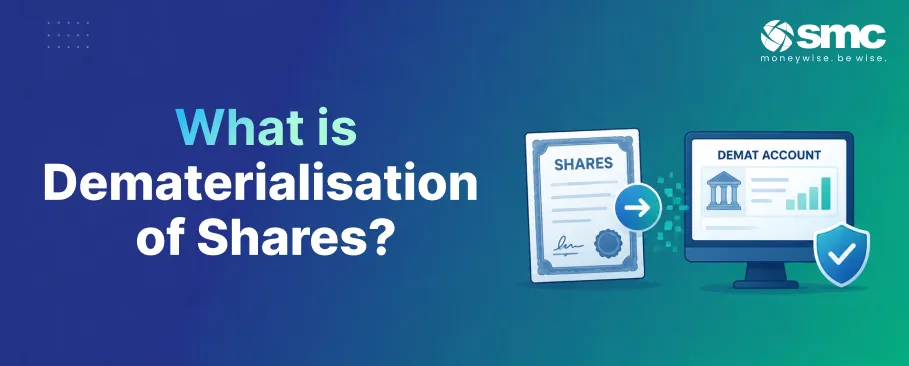


If you still have old physical share certificates, you can convert them into electronic form through dematerialisation. Once dematerialised, the shares are held electronically in your Demat account, making them easier to manage and transact.
Dematerialisation is especially useful if you plan to sell or transfer physical shares. Under SEBI's rules, physical shares can still be held, but transfers of securities in physical form are not permitted. To sell or transfer such shares, they generally need to be dematerialised first.
Let's understand what dematerialisation means, how the process works and what you need to keep in mind when converting physical shares into Demat form.
#What is Dematerialisation of Shares?
Dematerialisation of shares means converting physical share certificates into electronic form and holding them in a Demat account.
For example, if you have physical certificates representing 100 shares of a listed company, you can submit them for dematerialisation through your Depository Participant (DP). Once the request is processed and approved, the equivalent shares are credited electronically to your Demat account.
The process eliminates the need to keep physical certificates safe and makes it easier to manage your investments electronically.
#Why Dematerialise Physical Shares?
Converting physical shares into Demat form can make managing your investments simpler.
#Easier to Manage
Once your shares are held electronically, you can view them through your Demat account instead of maintaining physical certificates.
#Safer Records
Dematerialisation reduces the risk of losing, damaging or misplacing physical share certificates.
#Easier to Sell or Transfer
Physical securities generally need to be dematerialised before they can be transferred. This makes dematerialisation important if you want to sell or transfer eligible physical shares.
#Convenient Corporate Actions
Dividends, bonus shares, rights issues and other corporate actions can be credited or processed against your electronic holdings, subject to the applicable rules.
#How to Dematerialise Physical Shares?
If you are wondering how to dematerialise physical shares, the process generally involves the following steps:
#1. Open a Demat Account
First, you need a Demat account with a Depository Participant (DP) registered with NSDL or CDSL.
If you already have a Demat account, you can approach your existing DP for the dematerialisation request.
#2. Fill the Dematerialisation Request Form
Ask your DP for a Dematerialisation Request Form (DRF) and provide the required details, such as your name, folio number, company name and details of the physical securities.
Make sure the details in your request match the records of the company or its Registrar and Transfer Agent (RTA).
#3. Submit the Physical Share Certificates
Submit the DRF along with the relevant original physical share certificates to your DP.
The certificates are surrendered for dematerialisation and are processed through the prescribed DP, depository and issuer/RTA mechanism.
#4. Verification by the Issuer/RTA
The request is sent for verification. The company or its RTA checks the details and confirms whether the securities can be dematerialised.
If there is a discrepancy, additional documents or clarification may be required.
#5. Shares Are Credited to Your Demat Account
Once the request is approved, the corresponding securities are credited electronically to your Demat account.
The exact time taken depends on the DP, company/RTA, and the verification process, so it is better not to assume a fixed number of days.
#Documents Required for Dematerialisation
The required documents may vary depending on your case and the DP's requirements. Generally, you may need:
- Original physical share certificates
- Dematerialisation Request Form (DRF)
- PAN and other KYC documents, where required
- Details of your Demat account
- Additional documents if there is a name mismatch, transmission issue or another discrepancy
If the physical certificate is damaged or lost, or the details do not match the issuer's records, the process may require additional documentation.
#What If There Is a Name Mismatch?
The name on your physical share certificate should generally match the details in your Demat account and the issuer's records.
If there is a difference due to a name change, marriage, or another reason, you may need to provide supporting documents and complete the required process with the company/RTA before the shares can be dematerialised.
Similarly, if the shares belong to a deceased shareholder, the transmission process may need to be completed before the securities can be credited to the legal heir's Demat account.
#What If Your Physical Share Certificate Is Lost?
If you have lost your physical share certificate, you generally cannot simply submit a DRF in its place.
You may need to approach the company's RTA and follow the prescribed procedure for obtaining the securities in Demat form. Depending on the case, this can involve documents such as an indemnity, affidavit or other supporting records.
SEBI has also introduced measures to simplify certain investor-service requests. Effective April 2, 2026, the requirement for a Letter of Confirmation in specified cases was removed, with securities to be credited directly to the investor's Demat account upon completion of the required due diligence.
#Note: The exact procedure for lost certificates depends on the circumstances and the requirements of the company/RTA.
#Benefits After Dematerialisation
Once your physical shares are converted into Demat form, managing them becomes easier.
- #Easy tracking: View your holdings electronically through your Demat account.
- #Convenient transactions: Sell or transfer eligible securities through the normal Demat process.
- #Less paperwork: You no longer need to maintain physical certificates for your dematerialised holdings.
- #Corporate actions: Eligible dividends, bonus shares and other benefits can be processed against your electronic holdings.
- #Pledging: Dematerialised securities can generally be pledged, subject to applicable rules and DP/broker requirements.
#Dematerialisation vs Rematerialisation
Dematerialisation converts physical share certificates into electronic form. Rematerialisation does the opposite by converting electronically held securities back into physical certificates.
Rematerialisation is less common today, as electronic holdings are generally more convenient to manage.
#What Happens After Dematerialisation?
Once your shares are successfully dematerialised, they are reflected in your Demat account. You can then:
- Track your holdings online
- Sell or transfer the shares through the applicable process
- Receive eligible corporate actions electronically
- Pledge eligible securities, subject to applicable rules
- Include the holdings in your overall Demat portfolio
Remember to keep your transaction records and Demat statements safely for future reference.
#Common Mistakes to Avoid
A few simple checks can help prevent delays:
#Check the details: Make sure your name, folio number and share details match the issuer's records.
#Submit the correct form: Fill the DRF carefully and provide all required information.
#Keep the certificates safe: Submit the original certificates as required by your DP and keep copies or records for your reference.
#Check for discrepancies: Name mismatches, damaged certificates or differences in shareholder details may require additional steps.
#Follow up on the request: If the shares are not credited within the expected processing period, contact your DP or the company's RTA.
#Is Dematerialisation Mandatory?
No, shareholders can continue to hold eligible shares in physical form. However, transfer of securities held in physical form is generally not permitted. If you want to transfer or sell such shares, they generally need to be dematerialised first.
This makes dematerialisation particularly important for investors who still hold old physical share certificates and want to transact in them.
#Conclusion
Dematerialisation makes it easier to manage physical shareholdings by converting paper certificates into electronic securities held in a Demat account.
If you have old physical shares, the first step is to check the details on the certificates and contact your Depository Participant. Complete the required DRF and submit the certificates for processing.
Once the request is verified and approved, the shares are credited to your Demat account, allowing you to manage them electronically.

 1800 11 0909
 smc.care@smctradeonline.com