
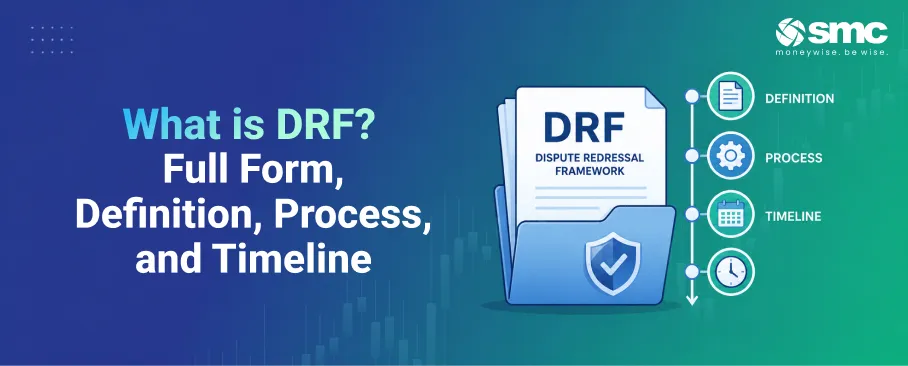


A DRF is the document used to convert physical share certificates into electronic holdings in a demat account. It is submitted to your Depository Participant (DP) along with the original certificates, and a separate DRF is required for each ISIN. The request then moves through the DP, the depository, and the company's registrar before the shares are credited electronically to your demat account.
Dematerialisation is essential if you want to sell or transfer listed shares still held in physical form, and delays usually stem from issues such as signature mismatches, incorrect ISINs, or discrepancies in holder details.
Dematerialisation is generally required when selling or transferring listed shares held in physical form, subject to applicable exceptions and special windows. Delays usually arise from issues such as signature mismatches, incorrect ISINs, or differences in holder details.
In this blog, we'll explain what a DRF is, how the dematerialisation process works, which documents are required, how long it usually takes, and the common reasons a request may be rejected.
What is a DRF and what does DRF stand for?
The DRF full form is Dematerialisation Request Form. Some depositories and brokers write it as the Demat Request Form, and both names refer to the same document. It is the form you submit to your Depository Participant, along with your original certificates, to have those certificates converted into an electronic balance in your demat account.
- SEBI's guidance puts it plainly: to dematerialise physical securities you fill in a DRF available with your DP and submit it together with the certificates to be converted, and a separate DRF is required for each ISIN.
- NSDL describes the same step as the registered owner submitting a request in the Dematerialisation Request Form along with the certificates of securities to be dematerialised.
What is dematerialisation of shares?
Dematerialisation, usually shortened to demat and also spelt dematerialization, is the conversion of a physical share certificate into an electronic entry in a depository's records for the same number of shares. The paper certificate and the transfer deed drop out of the picture, and your holding then exists as a book entry in your demat account.
The legal basis is the Depositories Act, 1996. Section 9(1) requires that all securities held by a depository be dematerialised and held in fungible form, which is why electronic holdings carry no distinctive certificate numbers. The operating detail is set out in the SEBI (Depositories and Participants) Regulations, 2018, which NSDL and CDSL implement through their own operating instructions for DPs and registrars.
The forms people confuse with a DRF
A DRF converts paper into electronic form. Four other documents sit close to it and get mixed up with it regularly.
#The dematerialisation process, step by step
Four parties handle the request: you, your Depository Participant, the depository (NSDL or CDSL), and the company's Registrar and Transfer Agent, who checks it against the Register of Members and decides the outcome.
On your side and your DP's side, the sequence runs like this:
- Collect a DRF form from your DP and fill it in block letters, ISIN by ISIN, with certificate numbers, distinctive number ranges, face value and quantity.
- Sign as per the specimen signature held by both your DP and the registrar. All joint holders sign in the same order shown on the certificate.
- Hand over the original certificates with the completed form.
- Your DP checks that the security is admitted to the depository, that the ISIN is correct and that signatures match.
- Your DP defaces the certificates, usually by punching holes so they cannot be reused, and sets up the request in the system. That generates a unique Demat Request Number.
From there, the request leaves your DP. It travels electronically through the depository to the registrar, while the defaced certificates and the physical form go by post or courier. The registrar records the date it receives the papers, matches the request number, account number, ISIN and quantity between the electronic and physical versions, and cross-checks the form against the Register of Members. If everything agrees, registered ownership passes to the depository's nominee name, the Register of Members is updated, and the registrar confirms electronically. That confirmation credits the shares to your demat account.
The ISIN, a unique twelve-character code for each security, is the detail worth double-checking. SEBI stresses that it must be stated on the form, and any mismatch will cause rejection.
How long dematerialisation takes
In practice, allow roughly three to five weeks end-to-end. The 15-day confirmation window only starts once the registrar physically has your papers, so DP processing and courier transit add to it. Anyone expecting same-week credit is working from the wrong assumption.
What to submit, and why requests get rejected
Your original certificates must accompany the form. A separate DRF is needed for each ISIN, and separately again for free shares against locked-in shares, with a further form for each distinct lock-in reason or release date. Names and signatures have to match the records held by both your DP and the registrar, and joint holders must sign in the recorded order.
Registrars work to a standard list of rejection codes. The common ones are a quantity mismatch between the certificates and the form, a wrong ISIN, a signature mismatch, an incorrect holder name or holding pattern, certificates already reported lost or duplicated, and unpaid call money. On rejection, the registrar issues an objection memo, and the papers travel back to your DP.
Mismatches are not always fatal. Under a SEBI circular from 2021, a minor signature mismatch obliges the registrar to write to you by speed post and allow 15 days to object before processing continues. A major mismatch, or no signature record at all, needs a banker's attestation through Form ISR-2. A minor name difference, such as initials that were never spelled out, can be settled with a standard identity document.
Why you cannot sell physical shares any more
SEBI amended Regulation 40 of the Listing Regulations so that transfer requests for listed securities would not be processed unless the securities were held in dematerialised form. After an extension, the rule took effect from 1 April 2019.
SEBI has opened a special window from 5 February 2026 to 4 February 2027 for eligible physical securities sold or purchased before 1 April 2019. Eligible investors can complete transfer and dematerialisation during this window, subject to prescribed conditions.
Two points are widely misread. The rule did not ban holding shares on paper, so certificates in a drawer remain valid indefinitely. What it stopped was transfer in physical mode, meaning a sale or gift between living people. Transmission on death and transposition of joint names were both exempted. SEBI confirms this is still the position, which is why dematerialisation is unavoidable the moment you want to sell.
Where dividends have gone unclaimed for seven consecutive years, the shares move to the Investor Education and Protection Fund under Section 124 of the Companies Act, 2013. They are recoverable through Form IEPF-5 on the MCA portal, and come back into a demat account rather than as paper.
Conclusion
A DRF is a short form doing a large job: it is the document that turns a paper certificate into a tradeable electronic holding. Fill it in ISIN by ISIN, match your signatures to the records your DP and the registrar hold, surrender the original certificates, and allow a few weeks rather than a few days. Most rejections come down to a mismatch you can check for before you submit.
If you are dematerialising old certificates and do not yet have somewhere to hold them, you can open a demat account with SMC and start the process there.
Investments in securities markets are subject to market risks. Read all the related documents carefully before investing.

 1800 11 0909
 smc.care@smctradeonline.com